


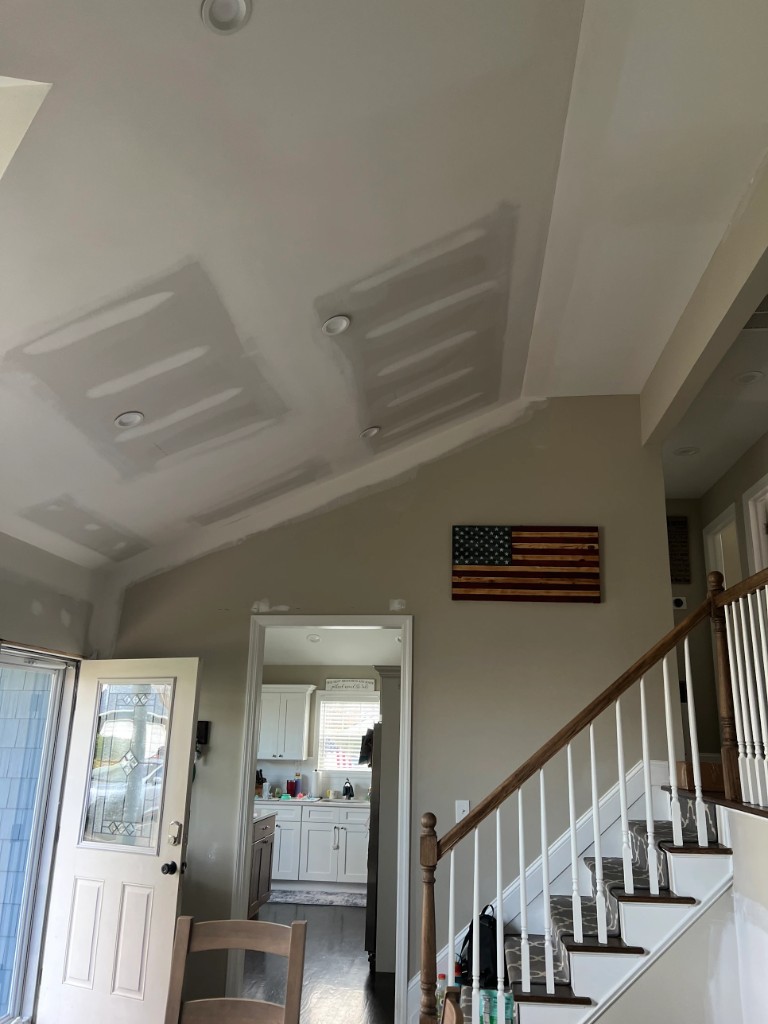
Vaulted Ceilings Make Bad Drywall Lines Stand Out

Vaulted ceilings can make a room feel open, bright, and impressive. But they also make drywall problems harder to hide. When ceiling lines are crooked, seams are raised, corners are uneven, or old repairs catch the light, your eye goes straight to the flaw instead of the room itself. A careful drywall repair can bring those lines back under control and make the entire space feel cleaner and more finished.
Why vaulted ceilings show every mistake
On a flat wall, a small drywall flaw may blend into the background. On a vaulted ceiling, that same flaw can become the first thing you notice. The height, angles, and natural light all work together to expose uneven seams, bad tape lines, cracked joints, and rough patches.
The most noticeable problems usually happen where the ceiling meets the wall, where two slopes come together, around recessed lights, and along long drywall seams. These areas need more than a quick coat of mud. They need careful buildup, feathering, sanding, and checking from the angles where people actually see the room.
How we clean up the lines
From distracting seams to a cleaner, paint-ready room
-
Find the lines that pull attention
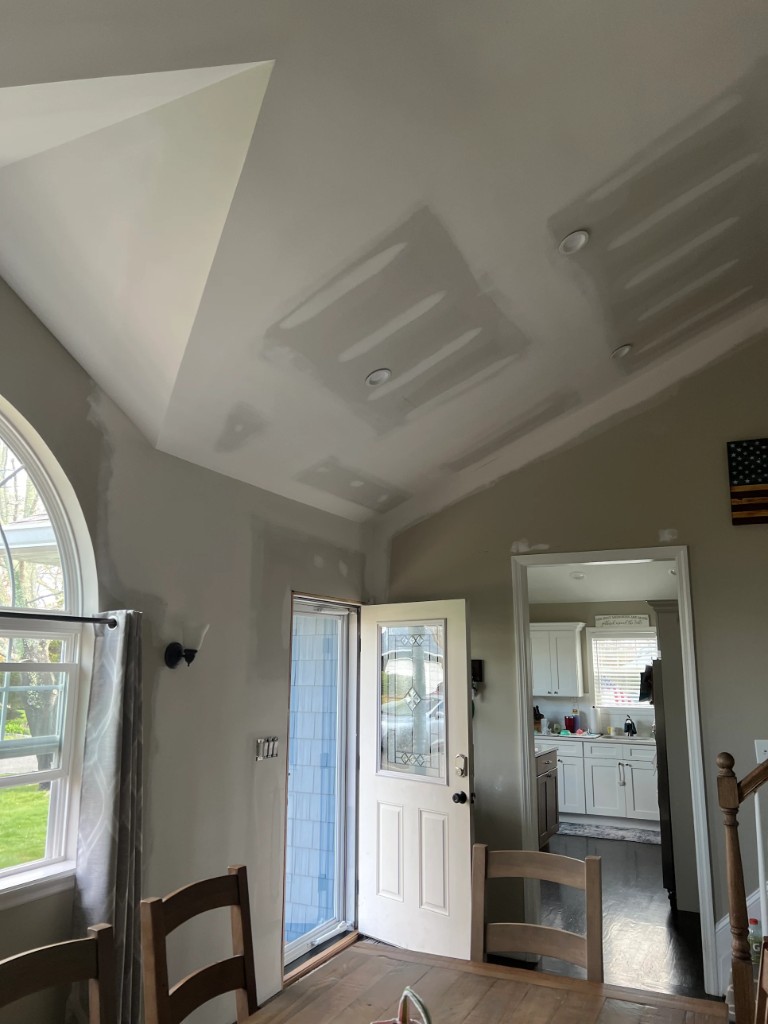
Before we start coating everything, we look for the lines that are actually distracting in the room. That includes seams, corners, fastener spots, old patches, and areas where the light makes uneven drywall stand out. -
Straighten the ceiling-to-wall transitions
The line where the wall meets the vault has to look steady from across the room. We build up low areas, feather out rough spots, and sand the transition so the angle looks clean once primer and paint go on. -
Refine the slope and visible sightlines
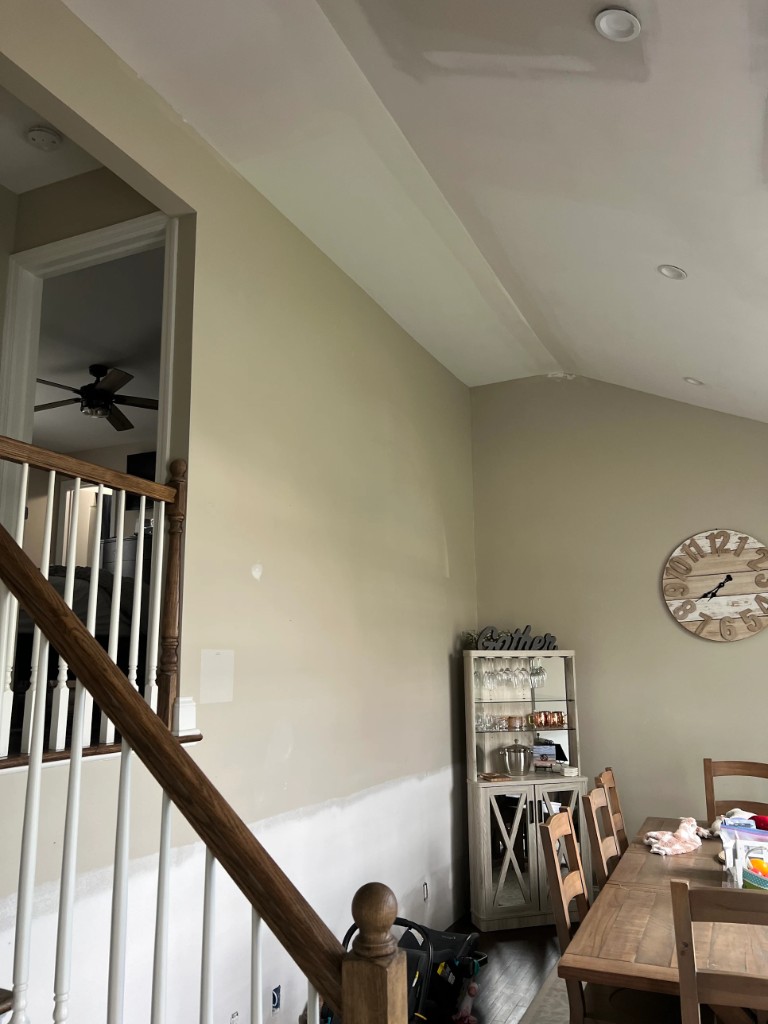
Sloped ceilings, recessed lights, and tall walls all reveal shortcuts. We smooth the surface in wider passes so the repair blends into the surrounding ceiling instead of leaving a hump, stripe, or obvious patch.
The goal is not just patched drywall
A good drywall repair should not call attention to itself. The goal is for the room to feel right again. Clean ceiling lines, smoother transitions, and fewer visible flaws can make a vaulted space feel brighter, sharper, and more complete.
- Straighter ceiling-to-wall lines.
- Smoother seams and transitions.
- Less attention on old cracks, tape lines, and rough patches.
- A cleaner surface that is ready for primer and paint.
- A room that feels finished instead of almost finished.




